Colonel John Henry Patterson is the author of a memoir titled “The Man Eaters of Tsavo.” By all measures a great tale, so much so that Patterson’s writings spawned a somewhat fictional Hollywood version titled “The Ghost and the Darkness” in 1996. Some know the story or have read Patterson’s book, but the specifics of the firearms used are not fully known.
Patterson’s writings allude to a .303 bolt action rifle as his primary firearm. It can safely be assumed he was referring to a Lee-Enfield SMLE in .303 British. When Patterson was dispatched to oversee the completion of a railroad bridge spanning the river Tsavo, this rifle was the newly adopted standard issue service rifle for the British armed forces. With the conversion from black powder to Cordite, the round from the SMLE could push a 215-grain bullet at 1,970 feet per second. By today’s standard this rifle would not be anyone’s choice as a dangerous game gun, but in 1898 it was considered sufficient.
Though shrouded in mystery, Patterson mentions a Martini rifle in his writings. Determini which rifle he was referring to requires an assumption based on the most likely model available at the time. In 1871 the British armed forces adopted the Henry-Martini falling block rifle as its standard service weapon. This single shot action utilized a rimmed cartridge employing a .577 case, necked down to a .450 caliber bullet. This cartridge featured a slow-moving bullet but packed a punch by compensating for low velocity with a massive 480-grain bullet. During the campaign era, several large and dangerous game animals fell to the Henry-Martini rifle in this configuration.
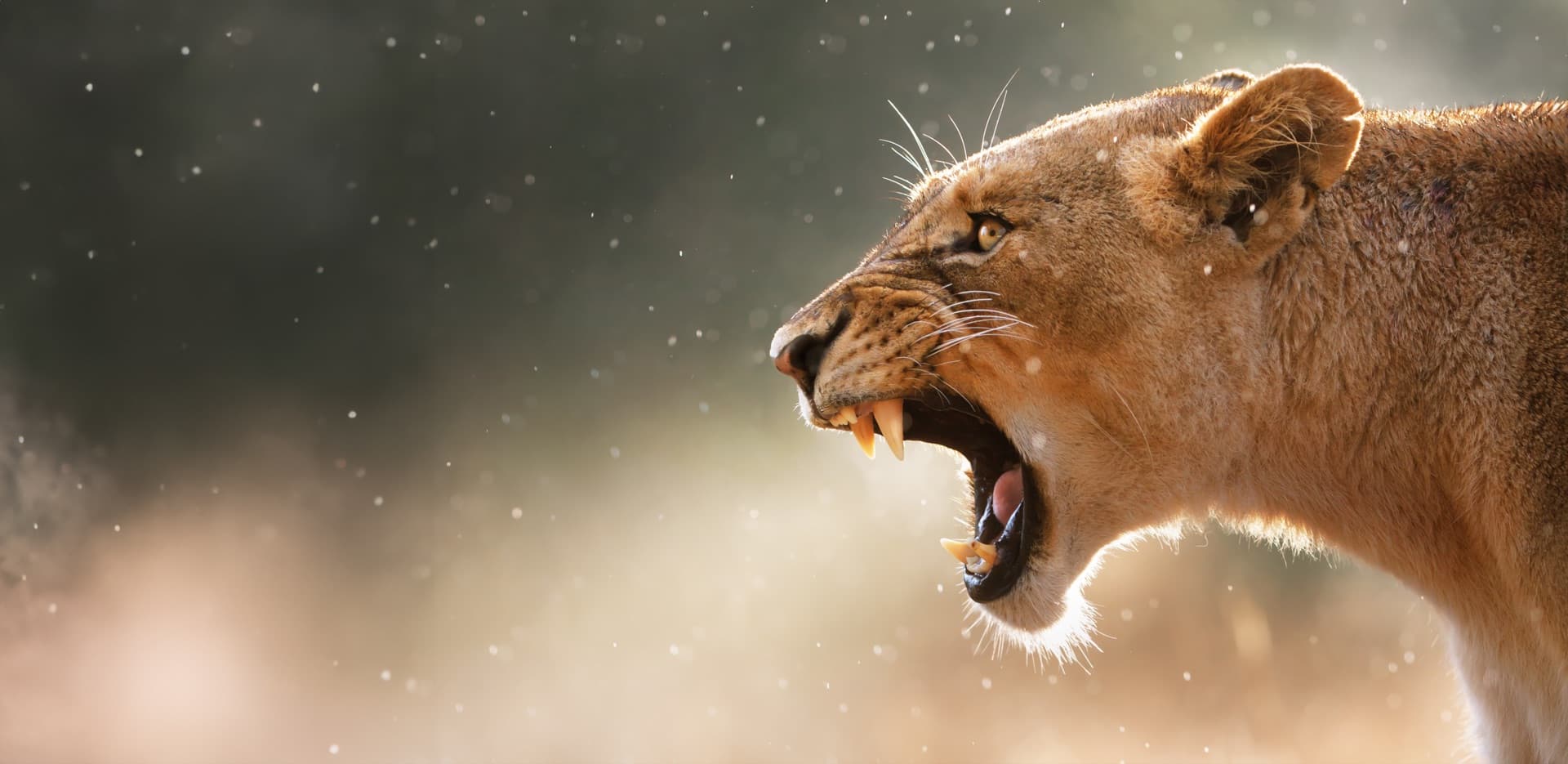
The next rifle employed by Patterson in the saga to end the carnage brought by the man eaters of Tsavo, was a large bore double rifle of unknown make or caliber. The famous scene in the Ghost and the Darkness where a young boy comes running to inform Patterson that a lion had tried to attack a man but instead had killed a donkey and was still feeding on it, led Patterson to grab this double rifle and pursue the lion into the bush. When Patterson found the lion, he came face to face with the beast at roughly 15 yards. After spooking the lion in the initial stalk, he organized a line of beaters with the coolies in his employ. This tactic worked to give him an opportunity to take this lion, but the double rifle failed him. Patterson wrote, “out into an open path stepped a huge mane-less lion. I let him approach to within about 15 yards then covered his brain with my rifle. I pulled the trigger but to my horror heard the dull snap of a misfire.”
Patterson the. built a machan, (a makeshift 12-foot-tall platform) using the carcass of the donkey as bait, in the hopes that he could persuade one or both lions to come into range. On this hunt the lion came in late in the evening but had no interest in the donkey carcass, he was stalking Patterson. After a harrowing two-hours where the lion slowly circled his machan, a silhouette came into focus and Patterson fired repeatedly, striking and killing the first lion with the Lee-Enfield .303 service rifle.
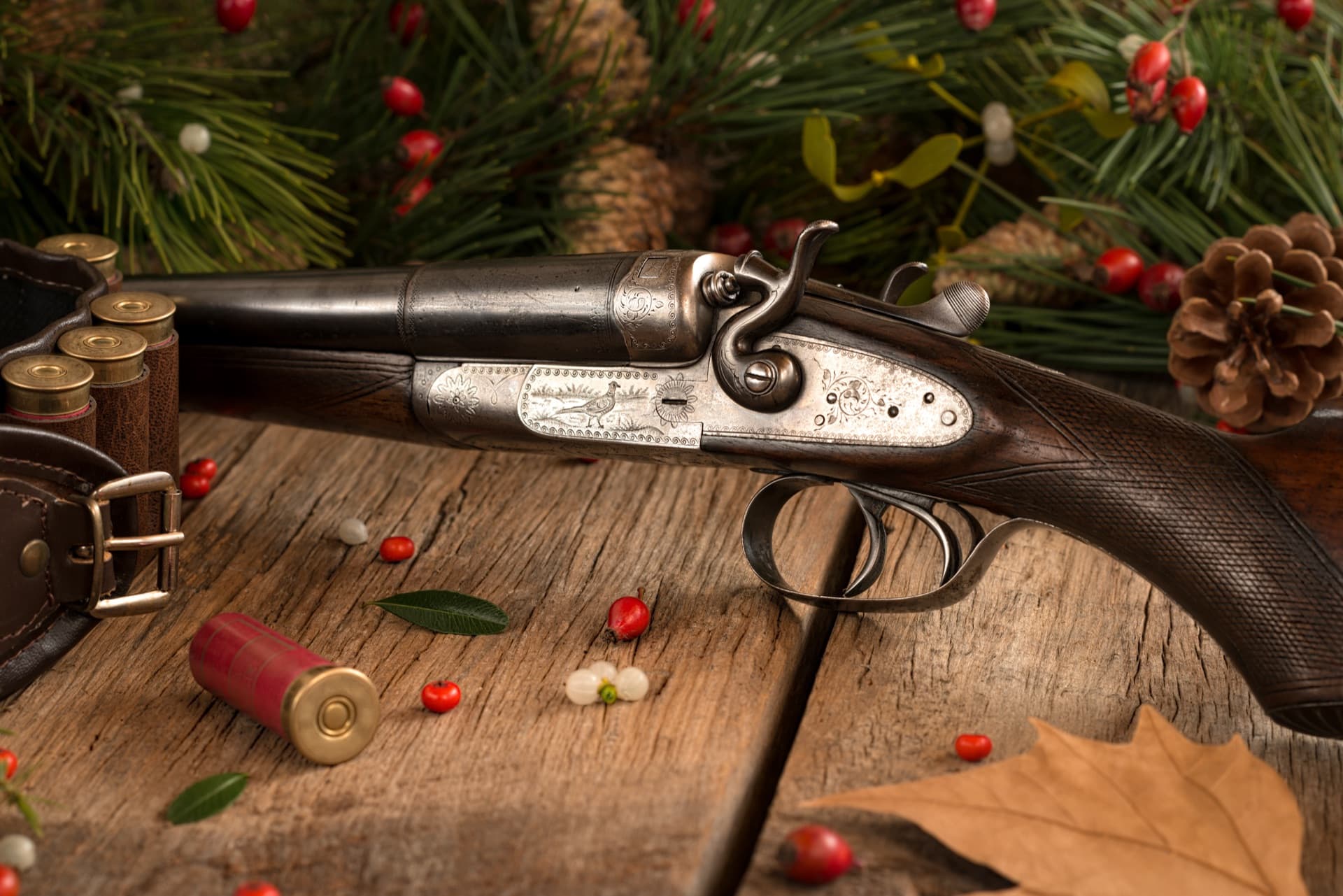
Although successful taking the first lion, the second would prove to be more challenging. Patterson was notified of an incident where a lion had killed two goats. He set out for the location and set up a blind, adjacent to three goats he’d tethered to a heavy section of rail. This night, the crafty lion killed one goat but drug it, along with the other two goats still tethered to the rail, into the bush. Undeterred, Patterson constructed another machan for that evening and posted atop the platform with both a 12-bore shotgun and his .303. There is no mention of the manufacturer or model, but it was clearly a double barrel as Patterson wrote that he had “loaded both barrels with heavy slugs.” That evening when the lion passed beneath his machan, Patterson emptied both barrels of this shotgun into the lion. This man eater quickly vacated the scene, giving the hunter no opportunity to fire his .303.
Although the lion had absorbed two slugs from the shotgun, it would take twelve days until the job was completed. The evening of the eleventh day, after the lion had been spotted roaming around searching empty tents, Patterson once again built a machan in a tree and waited. When the lion came in that evening, Patterson put a round from his Enfield into the lion’s chest, but the fight was not over. The next morning, the track led to the wounded cat who still had enough energy to charge Patterson and his gun bearer. After hitting the lion with his first and second shot, while the lion was charging, the .303 to no immediate effect. Patterson the reached for his Martini rifle to find that the situation had driven his gun bearer to climb a tree. Patterson ascended the same tree seconds before the lion arrived at its base, retrieving his Martini rifle, and firing twice to put an end to the terror brought about by the man eaters of Tsavo.
Colonel Patterson’s book, The Man Eaters of Tsavo, was published in 1907 and stands as perhaps the most harrowing event in modern record, pertaining to man’s conflict with African lions. The factual events chronicled in his writings are riveting and terrifying but speak to the resolve of one man and his unwavering commitment to his goal and duty.
“The silence of an African jungle on a dark night needs to be experienced to be realised; it is most impressive, especially when one is absolutely alone and isolated from one's fellow creatures, as I was then.” - Lt. Col. John Henry Patterson D.S.O.