I spent the day with Ken Kelley and his staff, the original innovators of the ported barrel at their factory in Michigan. While one of the reasons for being here was to have my new pigeon barrels ported, I was also interested in the history of the company and its lineage.
Ken is the current President of Mag-na-port International and is the son of founder Larry Kelly. Although I never had the opportunity to meet Larry Kelly, it became clear that he had a larger-than-life personality. From the moment I walked into his office, which has been kept the same since his passing, I was sure this gentleman hunter and shooter would have been great to know. His desk is flanked on the corners by authentic elephant ivory from animals he had harvested himself, the room is full of mounts, pelts, artifacts and gun cases. Pictures adorn the wall and one of the coolest deep relief wood engravings I’ve ever seen is placed on center behind Larry’s desk. This is just a very cool room filled with so many of the things us sporting types really enjoy. This was the perfect place for Ken and I to sit down and talk about all things porting, and the benefits for shotgun shooters.
As mentioned above I was here to have my new pigeon barrels ported. While I have shot ported sporting guns before, I never really understood the full benefits until a friend from Missouri, Garrett Benskin, did the research and testing. For those of us who shoot the ring games, success can rely heavily on quick acquisition of the target for a second shot. While we shoot moderate loads at Helice (1oz, 1300 FPS), when we shoot flyers, we use 1 ¼ ounce 1330 feet per second shotshells. These pack a wallop and cause a bit of muzzle flip, lifting the barrel above the point of aim on the first shot. This muzzle flip requires correction by the shooter before taking the second shot. When it comes to flyers and helice, this corrective indexing on the target could be minor or could require a significant amount of barrel movement. Consequently, mitigating this muzzle flip will reduce the margin of error when indexing for the second shot. But how do we mitigate this? Porting.
Through video testing, Garrett compared the muzzle flip of the barrels of his Krieghoff Pro Sporter before porting, then after. He utilized a Shotkam, barrel mounted laser and a pattern plate, to show how much rise occurred with different loads. The shotgun was placed on a tripod, and no downward pressure was applied to the gunstock, allowing the barrels to rise on each shot without mitigating pressure. Garrett used 1 ounce loads consistent with what is normally used for helice, then used two different types of flyer loads, both 1 ¼ ounce, one at 1255 feet per second and the other pushing 1410 feet per second. What he determined is that in all instances, the muzzle flip with ported barrels was reduced between 66 and 75 percent, with the 75 percent reduction realized on the heaviest loads.
How does this work? Simply put, when a shotgun shell goes off a mini explosion occurs within the chamber of the shotgun. This explosion creates rapidly expanding gases which propel the shot out the end of the barrel. These gases dissipate after leaving the end of the barrel, which is one point of exit. With a ported barrel, small geometrically specific holes are created part of the way down the barrel to bleed some of the gases off before the shot and wad column leave the end of the barrel. Considering the powder is completely burnt and maximum velocity is already achieved at about 20 inches of barrel; porting has zero impact on performance of the shell. It simply redirects and alleviates the gases in a different direction, reducing the total amount of gas discharged through the muzzle. This serves to reduce that muzzle flip.
Ken explained their extensive research and development with different methodologies, fine tuning the angles and placement of the ports to maximize impact on muzzle flip while ensuring the inside of the ports do not serve as cheese graders for shotshell wads as they pass. He has spent the vast majority of his life in this realm, tuning and creating custom shooting pieces for many of the who’s who of hunting and shooting. In 2007, Ken was presented with the prestigious Pistolsmith of the Year award, joining some of the greatest in the industry. His passion for the shooting sports world and custom gun work showed through with his enthusiasm about so many current and past projects undertaken by Mag-na-Port.
Larry Kelly passed on his passion for innovation in the shooting sports world to his son Ken who carries on that standard of excellence to this day. Mag-na-Port was the originator of this technology and has continued to innovate since inception. They’ve been featured in numerous magazines, have done work for the world’s greatest champion shooters and have created amazing processes by which the average shooter can upgrade their sporting guns for optimal performance. Mag-na-port has also paid it forward with many organizations focused on supporting and promoting youth in the hunting and shooting sports world.
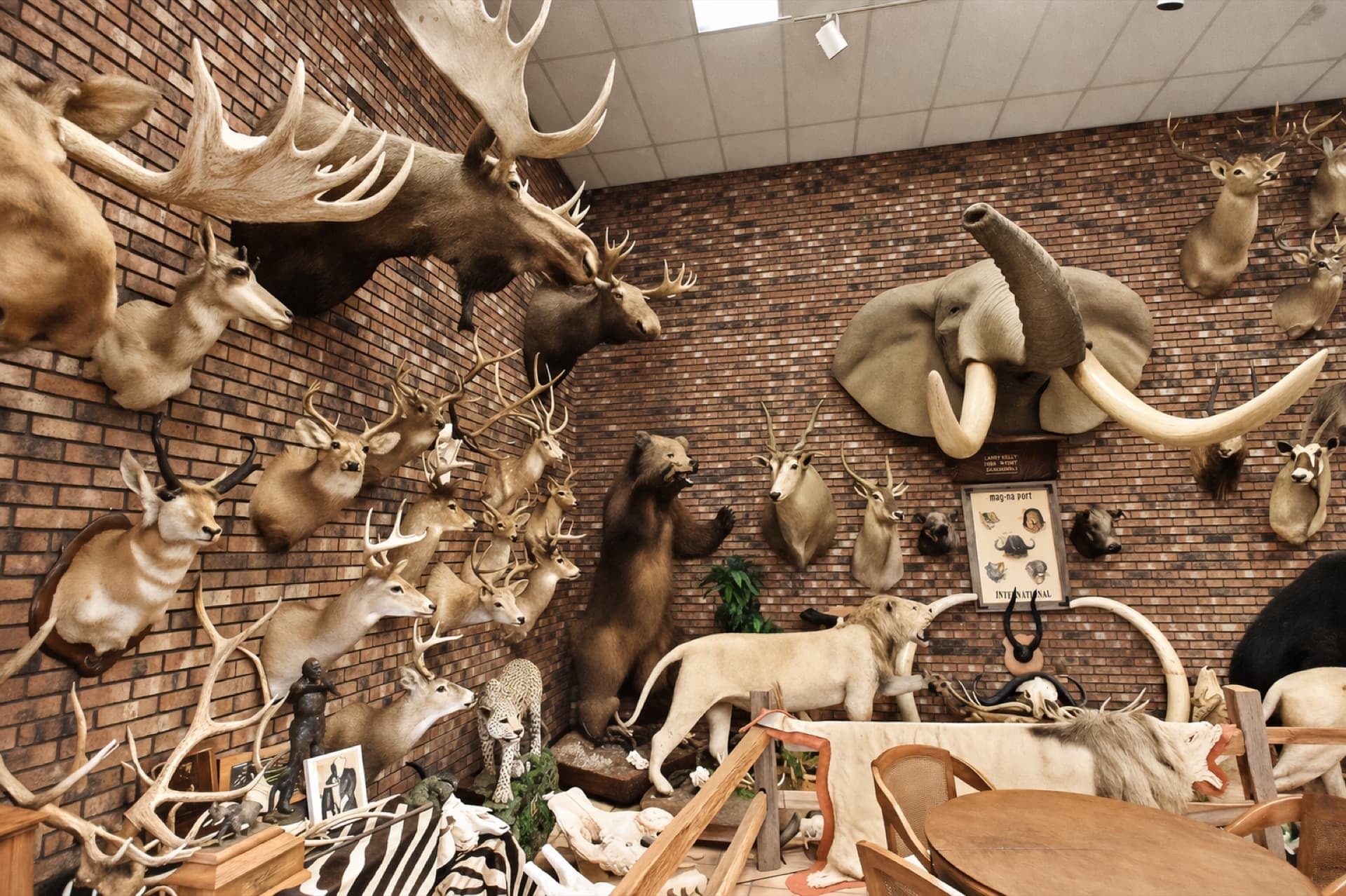
The really cool thing about Mag-na-port is…you can schedule a day to bring your shotgun, rifle or pistol in and have the porting done while you wait. When you first enter the building, you will be met by one of the most impressive trophy rooms you could imagine. Larry and Ken have hunted all over the world and the results from some of these adventures are proudly displayed in the main showroom of the building. This is a family owned and operated company which takes pride in their product and has immense reverence for their history.
Moral of the Story
Whether it be skeet, doubles trap, sporting clays or the ring games…a porting job from Mag-na-port will improve your performance by allowing quicker recovery and acquisition for that second shot.
After spending the day at their shop and discussing all the different services they offer, I have thought of five more projects just sitting in my safe I will be sending to Ken for work.
You can visit the Mag-na-port International website at: www.magnaport.com
Check out our Wing & Clay Life social media and Youtube pages where we have posted video of testing from Garrett Benskin and my conversation with Ken Kelly.