The heritage of wing shooting shells finds its roots in hulls made of waxed paper. From our more “seasoned” hunters up through modern competitive shooters, premium paper shotshells are coveted and perform well, with some attributing almost divine properties to them. While we cannot speculate as to the otherworldly capabilities some may experience from paper shells, we can certainly evaluate the new offering from Federal, the Upland Paper line.
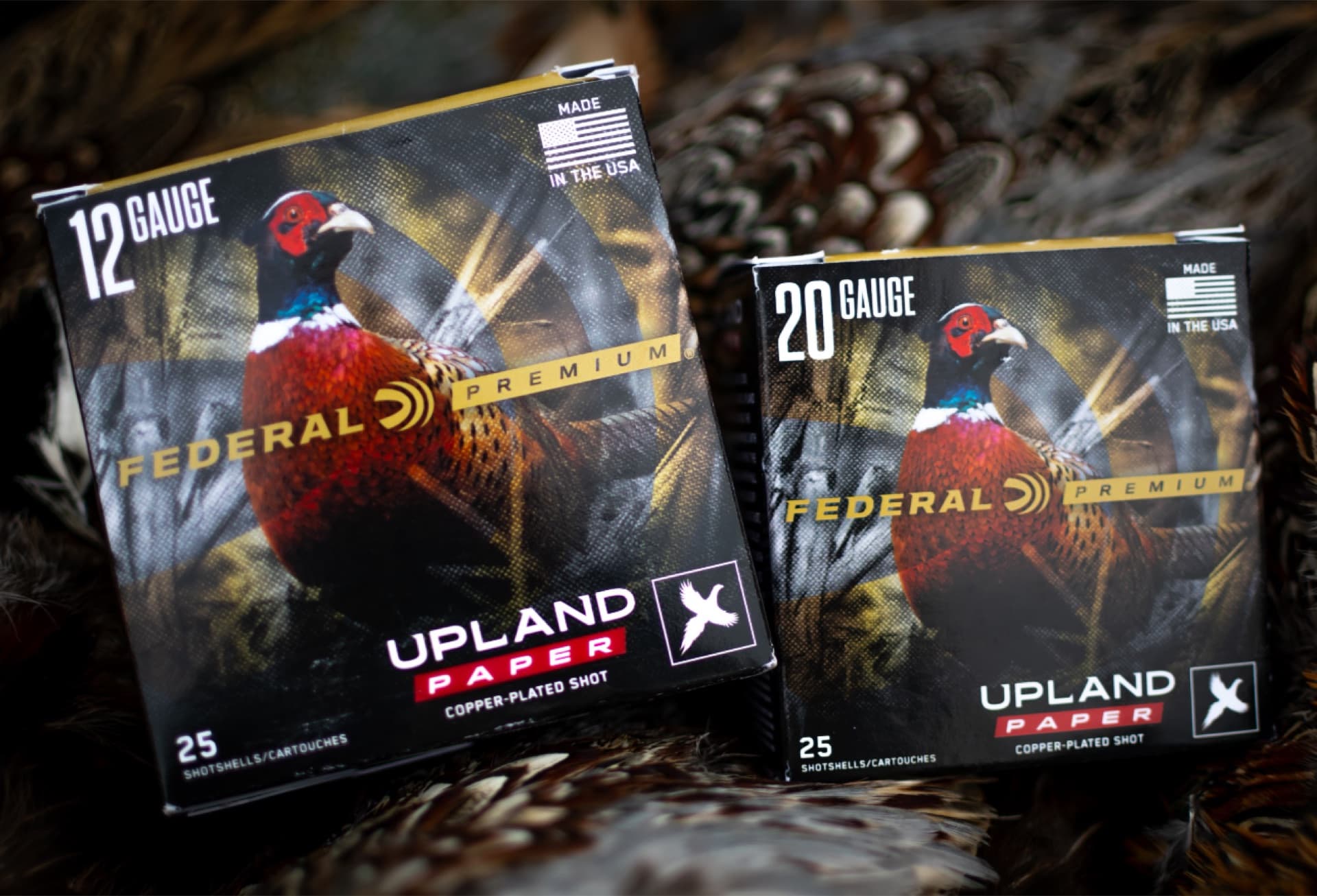
Again, the people at Federal sent a generous care package filled with a wide selection of this new load offering for review. Shot sizes four, five and six were all in the box each moving one and a quarter ounce of shot at 1330 feet per second. The shot is not just standard lead, its copper plated premium shot specifically designed to take down the toughest of birds on the wing.
Federal has placed this premium copper plated shot inside of a special wad, designed for optimal performance out of a paper hull. The Federal powder and primer ensure the magic happens when it’s most needed. They even bear that beautiful smell long associated with federal papers, the lingering sweet waft of memories of earlier, simpler times. The waxed paper hulls are very uniform and coated in wax to mitigate the negative effects of moist operating conditions.
Field Testing
The local hunting preserve was the testing ground for these loads on scratch pheasants that had previously eluded hunters and spent some time in the wild, making a living with their legs and wings. The early fall days were still a little warm, meaning early morning was best for my seven-year-old springer, and birds should fly well. It didn’t take long until he found scent about 200 yards out from the lodge and up went a pretty good-looking rooster. While I normally run smaller gauges for preserve pheasants, these loads from Federal were 12-gauge so my trusty Beretta autoloader was the tool of choice for this test. The Beretta barked once with a load of number 6s and down went the rooster.
We moved on to the north field and nabbed a true double with number 5s, and a very long wild flushing rooster at the north-west corner of the field with number 4s. All three shot sizes efficiently canceled the pheasant’s flight and each of the four birds were dispatched and retrieved exactly from where they dropped. This is an extremely important result for those of us who chase wild birds out west as I have previously hit them hard and saw their legs moving before they hit the ground, very tough critters for such pretty boys.
While this initial test was conducted with a gas operated autoloader, the question of felt recoil out of a side-by-side or over/under remained. After harvesting these first four roosters, I grabbed one of the club guns. A field model CZ Drake with 28” barrels. Admittedly, this gun was not fitted to me as most of my target or field guns are. The pitch is too shallow, length of pull short and comb not tall enough but it would be fine for the purpose of this test. Besides, many upland hunters don’t shoot guns that fit them, so this is a good benchmark for the average upland hunter who may use these shells.
I dropped a number six in the under barrel and a number four in the top barrel with the intent of using the top barrel for longer shots. The birds were wise to our presence and had woken up a bit more as the day warmed up, requiring more effort to find, but this springer was up to the task. The east end of the field has thick sorghum that ends at a bean field that had already been cut. The birds would likely hold tight in this section. We approached from the south, having a light west wind and worked our way up the east side of the sorghum patch. Halfway through this walk, the dog hit hot scent and launched into the cover. It wasn’t long before another rooster cackled and took to the air, at about 25 yards.
Embarrassingly my first shot missed…I could blame the gun, but it was a horrible mount on my part. The bird got out a little way as I re-adjusted the mount and my second shot with the load of Federal number 4s connected. I saw the bird drop and called the dog to heel. I paced off the distance from my shooting location to where the bird dropped and it was 52 yards. While the bird may have sailed a few yards after being shot, this was easily a 45-yard shot on this pheasant. The bird was expired when I got to it, and the shot did its job well.
Conclusions
While the nostalgia and wonderful smell of a paper shotshell is nice, the performance is what we all really care about when chasing birds in the wild. When cleaning these pheasants, I was impressed with the penetration these rounds achieved. Admittedly, these are preserve pheasants and didn’t have the plumage of a December North Dakota rooster, they were very mature and strong birds. The second metric many want to know about is felt recoil. Obviously, the recoil was negligible in the autoloader thanks to the gas system, but it wasn’t much more noticeable in the ill-fitting over/under. The Federal Upland Paper loads hit the mark on each metric applied in testing. Hard hitting, soft recoil and effective shot to a marvelous new upland shell.
PUP154 4 – 12-gauge, #4 shot, 2 ¾ inch, 1 ¼ ounce, 1330 FPS
PUP154 5 – 12-gauge, #5 shot, 2 ¾ inch, 1 ¼ ounce, 1330 FPS
PUP154 6 – 12-gauge, #6 shot, 2 ¾ inch, 1 ¼ ounce, 1330 FPS
PUP204 4 – 20-gauge, #4 shot, 2 ¾ inch, 1 ounce, 1250 FPS
PUP204 5 – 20-gauge, #5 shot, 2 ¾ inch, 1 ounce, 1250 FPS
PUP204 6 – 20-gauge, #6 shot, 2 ¾ inch, 1 ounce, 1250 FPS
These shells are now being shipped to retailers across the nation and have six total offerings for wingshooters to choose from. Visit their website and check out these excellent new upland shells.